
One day, six conversations every school could have at BRILLIANT
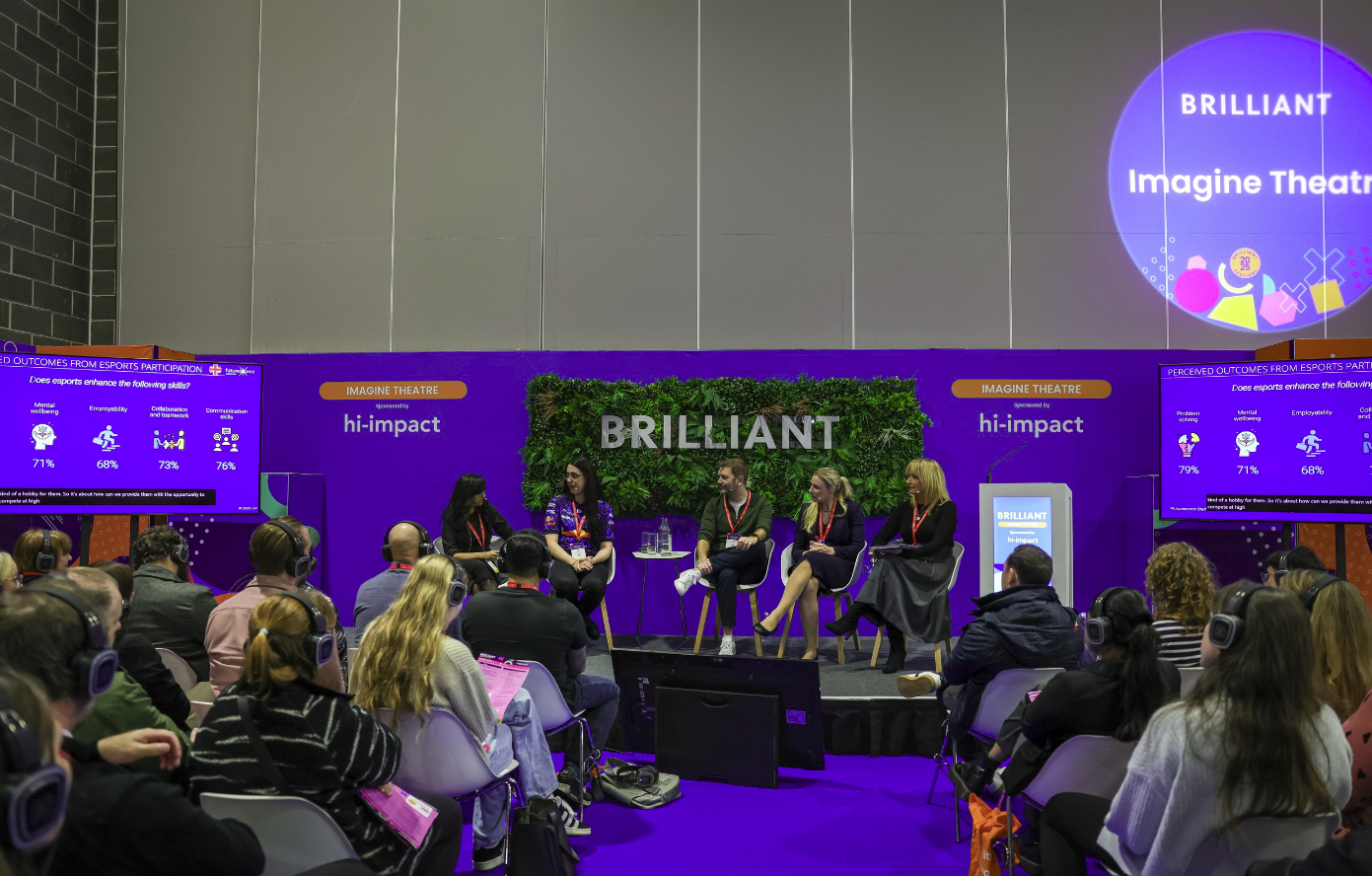
Education is changing quickly, but the biggest challenge for schools isn’t simply keeping up with new technology, new expectations or new ways of working, it’s working out what those changes actually mean for pupils, teachers and the future of education.
On 10th November, BRILLIANT Festival will once again bring educators, school leaders, industry, technology experts and innovators together at Exhibition Centre Liverpool to have these conversations properly.
The BRILLIANT agenda tackles some of the biggest questions facing education right now. Here are six conversations every school should be having, and some of the sessions helping to move them forward this November…
1. Are we preparing young people for the future workforce?
We’re preparing pupils for careers that will look very different from those many of us entered. AI and automation are changing existing roles, new industries are emerging and employers increasingly need people who can adapt, communicate, create and solve problems.
So what should schools be preparing young people for?
In Are We Preparing Young People for the Future Workforce?, Prof Andy Miah, Chair of Science Communication & Future Media at the University of Salford, chairs a conversation with Prof Lynne Bianchi, Director of Science & Engineering Education Research and Innovation Hub at The University of Manchester, Damien Reynolds BEM, Foundation Leader at Mindera UK Foundation, and Alex Zarifeh, Founder & Director of Futures Readiness Ltd, about what young people really need to succeed beyond the classroom.
That conversation continues through sessions including From Classroom to Career moderated by Thomas Blakemore, primary school teacher, content creator and founder of Teach Travel Triumph, with Carrie Ann Booth, Science Educator, TEDx Speaker and Founder of The Science Booth and The STEAM Educators’ Staff Room, Sean Dick, Senior Conservation Education Manager at Chester Zoo, and Stefanie Tinsley, Further Education Quality Specialist at Culture of Excellence Ltd.
And Breaking Barriers: Inspiring the Next Generation of Women in Technology, moderated by Becky Patel, Head of Education at Tech She Can, with Ian Browne, Early Careers and Skills Lead at Lloyds Banking Group, Lauren Forbes, Head of Growth and Partnerships at InnovateHer, Hayley Laidlaw-Wilson, Founder of Sniff and Snails, and Natalie Moore, CEO of Apps for Good.
Together, they ask a bigger question: are we giving young people the skills, experiences and understanding of the world beyond school that they’ll actually need when they get there?
2. What does AI actually mean for education now?
The conversation around AI has moved on. As we mentioned in a recent blog, the question is no longer simply whether schools should use it.
The questions now are much more practical, including:
How should AI be used responsibly?
Where can it genuinely improve teaching and learning?
What does it mean for safeguarding and bias?
How do we prepare pupils to use it critically in a world where it will increasingly become part of everyday life?
Those questions run throughout BRILLIANT’s AI content, with perspectives from speakers including Emma Darcy, AI and Technology for Learning Consultant, Victoria Hedlund, AI Bias Researcher, Consultant and Founder of GenEd Labs.ai, and Matthew Wemyss, Assistant School Director at Cambridge School of Bucharest, bringing experience spanning classroom practice, AI bias, safeguarding and school strategy.
Importantly, AI doesn’t sit in isolation on the agenda. It connects to conversations about SEND, teacher workload, careers, creativity and future skills.
You won’t leave with another debate about whether AI is coming. You’ll leave with a better understanding of what schools need to do now that it’s already here.
3. How do we create education that adapts to the learner?
Inclusion shouldn’t mean asking every pupil to fit into the same system.
BRILLIANT’s SEND and inclusion sessions ask what happens when we turn that around and start designing learning around the individual.
Speakers including Michelle Morgan, Co-Founder of The Adaptive Classroom, Kate Heath, Founder & CEO of Gaia Learning, Marie Beale, Deputy Headteacher and Inclusion Lead at Whitefield Primary School, and David Curran, Head of Careers and Assistive Technology and AI Lead at Moon Hall School Reigate, bring different perspectives on adaptive teaching, assistive technology, AI and removing barriers to learning.
It’s also a conversation that reaches much further than SEND-specific sessions. Esports can offer different routes into engagement, technology can make learning more accessible and STEAM gives pupils opportunities to demonstrate skills through making, experimenting and problem-solving.
The bigger question running through all of it is simple. How do we create an education system that allows more young people to succeed?
4. Is technology improving teaching, or simply adding more technology?
Schools have access to more technology than ever before, but more technology doesn’t automatically mean better education.
At BRILLIANT, speakers including Dr Fiona Aubrey-Smith, Founder of PedTech and Director of One Life Learning, Gemma Gwilliam, Head of Digital Learning, Education and Innovation for the ‘Portsmouth: The Digital City’ Project, Gary Henderson, Director of IT at Winchester College, and Tom Wade, Director of Digital Innovation and Enterprise at Haileybury, explore what happens when schools start with teaching and learning rather than the latest tool.
Questions explored include:
What problem are we actually trying to solve?
Where can technology improve outcomes or reduce workload?
When does it simply add another platform for teachers and pupils to navigate?
The Classroom of NOW takes that conversation from theory into practice, giving educators the opportunity to experience new approaches from the perspective of the learner.
Because the question isn’t how much technology a school uses, it’s whether that technology makes teaching, learning and school life better.
5. What skills become more important as technology gets smarter?
If AI can generate text, images, ideas and code in seconds, the skills that make us human become even more important.
Creativity, curiosity, communication, collaboration and problem-solving aren’t ‘nice to have’ additions to education. They’re increasingly central to preparing young people for what comes next.
Through BRILLIANT’s Creativity & STEAM content, speakers including Ruth Amos, Inventor at Kids Invent Stuff, Prof Lynne Bianchi, Director of Science & Engineering Education Research and Innovation Hub at The University of Manchester, Carrie Ann Booth, Science Educator, TEDx Speaker and Founder of The Science Booth and The STEAM Educators’ Staff Room, and Dr Sujit Bhattacharya, Founder & Director of Cambridge Electronics and Robotics Club and Principal Engineer at MDA Space & Robotics, will explore how we create more opportunities for young people to make, question, experiment, fail, rethink and try again.
These conversations aren’t simply about encouraging more pupils into science or engineering. They’re about developing young people who can think for themselves and approach unfamiliar problems with confidence.
Technology may be able to give pupils an answer, but education still needs to teach them what to do with it.
6. How do we bring the real world into education?
Young people are constantly asked what they want to be when they grow up, often before they’ve had the opportunity to understand what’s actually out there.
That’s why meaningful connections between education and industry matter, and why they run throughout BRILLIANT’s agenda.
Laura Giddings, National STEM Education Co-ordinator at Canal & River Trust, will explore how real-world STEM can connect classroom learning with careers in areas including engineering, environmental science and sustainability. Alongside her, BRILLIANT speakers including Ian Browne, Early Careers and Skills Lead at Lloyds Banking Group, Connor Llewellyn, Lead Associate at Skills Builder Partnership, Natalie Moore, CEO of Apps for Good, and Dan Powell, Head of Neon at EngineeringUK, will bring employer and future-skills perspectives.
Together, these perspectives open up a much bigger conversation about what meaningful industry engagement can look like. It isn’t simply telling pupils which careers exist, but giving them opportunities to understand where their learning could take them, develop the skills employers need and experience the real-world applications of what they learn in school.
It’s also important to remember that some of the most valuable industry engagements at BRILLIANT won’t happen on a stage. It comes from putting educators, employers and innovators in the same room and creating conversations that could become a new careers resource, an employer encounter, a STEAM project or a longer-term partnership.
One day, six conversations, and plenty to take back to your school
You probably won’t arrive at BRILLIANT with all six of these questions at the top of your list, and that’s the point.
You might come because your school is developing its AI strategy, because SEND provision is a priority, because you want stronger industry partnerships or because you’re looking for new ways to bring creativity into the curriculum.
Across one day, you can hear how other people are approaching those challenges, listen to different perspectives and discover ideas you might never encounter within your own school environment.
Choose the conversations that matter most to you and build a day around what your school needs next.
BRILLIANT Festival takes place on 10 November 2026 at Exhibition Centre Liverpool and is free to attend.