
STEAM Education Explained
Find out more about what STEAM education looks like in practice

What STEAM education looks like in practice
STEAM education brings together science, technology, engineering, arts and mathematics in a connected way, rather than treating them as separate subjects. It reflects how real-world innovation happens through a combination of technical knowledge and creative thinking. In UK schools, STEAM supports problem-solving, collaboration and adaptability. It is not a new subject, but a way of designing learning so that disciplines reinforce one another. Done well, it prepares students for further study, employment and lifelong learning.

What is STEAM education?
STEAM stands for science, technology, engineering, arts and mathematics. At its core, it is an approach to learning that connects these disciplines rather than teaching them in isolation.
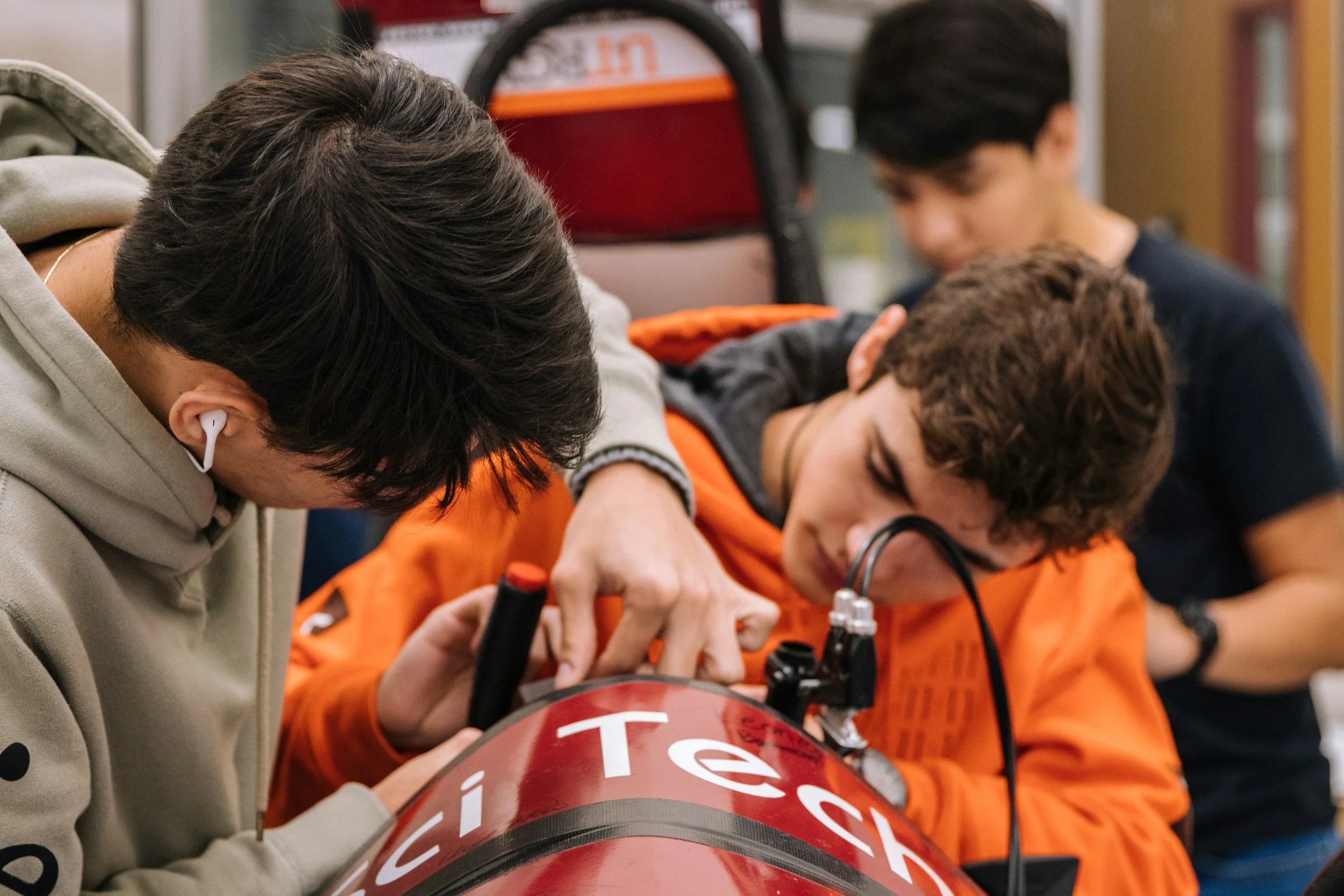
In a STEAM environment, students might design a sustainable building, which involves scientific understanding, mathematical calculation, digital modelling and creative presentation. They are not switching subjects — they are applying knowledge across them.
STEAM is not about reducing academic depth. It is about helping students see how knowledge works beyond the classroom.
What is the difference between STEM and STEAM?
STEM focuses on science, technology, engineering and mathematics. It emphasises technical skill and analytical thinking.
STEAM includes all of this, but recognises that creativity, design and communication are essential to innovation. The arts element strengthens problem-solving by encouraging imagination, empathy and user-centred thinking.
In practice, the difference is not dramatic but intentional. STEAM asks students not only to calculate or engineer, but also to design, present and reflect. It broadens the context without lowering expectations.

Why STEAM matters for future skills
Employers across sectors consistently highlight the need for adaptable thinkers who can work across disciplines. Technical knowledge remains crucial, but it is rarely enough on its own.
Future skills education increasingly emphasises collaboration, digital literacy, critical thinking and creativity. STEAM supports these capabilities because it mirrors how complex challenges are addressed in the real world.
Issues such as climate resilience, digital security or healthcare innovation do not sit neatly within a single subject. They require scientific understanding, technical skill and creative thinking working together.
By integrating disciplines early, schools help students build the confidence to approach unfamiliar problems with flexibility.

In practice, STEAM is less about adding something new and more about changing how learning is structured.
A primary class might explore space travel by combining physics, creative writing and digital design. A secondary project might ask students to design an assistive technology solution, drawing on engineering principles, coding and product design.
The emphasis is on extended inquiry rather than fragmented lessons. Students are encouraged to test ideas, refine prototypes and explain their thinking clearly.
For teachers, this often involves collaboration across departments and thoughtful planning. It works best when leadership supports experimentation and professional development builds confidence in interdisciplinary approaches.
National platforms such as BRILLIANT Festival regularly showcase examples of how UK schools are applying STEAM thinking in meaningful ways, helping move the conversation beyond theory.
What STEAM looks like in schools
Common challenges and misconceptions
One misconception is that STEAM dilutes academic rigour. In reality, it can increase it by requiring students to apply knowledge rather than simply recall it.
Another concern is that STEAM requires major curriculum overhaul. In many cases, schools begin by identifying natural connections between subjects and building from there.
There is also the practical challenge of time and training. Teachers need space to collaborate and confidence to step outside traditional subject boundaries. Without leadership support and professional development, STEAM can remain a label rather than a lived approach.
How schools can approach STEAM thoughtfully
Schools that implement STEAM successfully tend to start small. They identify projects where integration feels authentic rather than forced. They provide teachers with opportunities to share practice and reflect on outcomes. Most importantly, they keep learning goals clear.
STEAM works best when it enhances existing strengths rather than replacing them. It is a framework for connection, not a replacement for subject expertise.
In practice, the evolution of STEAM education is shaped by dialogue between schools, industry and creative sectors. Events like BRILLIANT Festival highlight how interdisciplinary learning is already being applied across UK schools, offering real examples of how technical expertise and creativity can coexist within modern education.