
Why Gaming and Immersive Experiences Are Becoming Serious Educational Tools
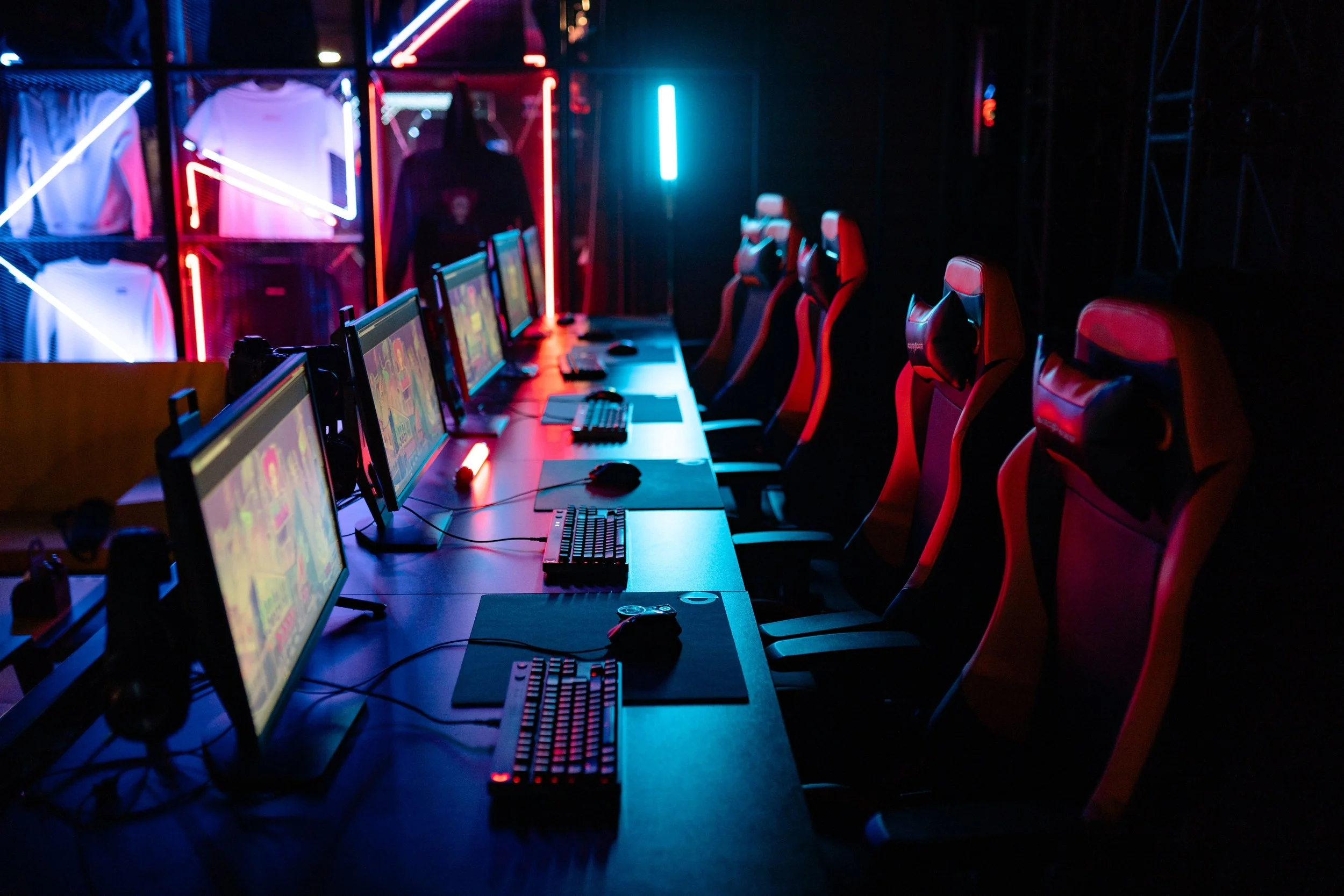
Credit: Yan Krukau
For years, gaming in education was often viewed as a distraction rather than an opportunity, but that perception is changing rapidly.
Across schools, colleges and industry, gaming and immersive technologies are increasingly being recognised as powerful tools for engagement, collaboration and future skills development. What was once seen as entertainment alone is now becoming part of a much bigger conversation about how young people learn, communicate and prepare for modern careers.
The reality is that many students already spend large parts of their lives in digital environments. What’s great about esports, is that it offers schools an opportunity to harness that familiarity in ways that support learning, rather than compete against it.
Gaming Builds More Than Technical Skills
One of the biggest misconceptions about gaming is that it only develops digital or technical ability.
In reality, many gaming environments require skills that employers consistently say they value highly. Communication, teamwork, strategic thinking, leadership, creativity, adaptability and problem-solving are all regularly developed through collaborative and competitive gameplay.
Esports in particular has helped schools recognise this shift. Students involved in esports programmes are often developing presentation skills, event management experience, teamwork, broadcasting knowledge and content creation abilities alongside gameplay itself.
These are transferable skills that connect directly to modern industries. Educators’ roles here are to show young people what skills they have developed and why they’re relevant in the workplace.
Engagement Looks Different for Today’s Students
Schools are continually exploring how to improve engagement, participation and confidence among learners. Immersive experiences can play an important role in that.
Gaming environments naturally encourage exploration, experimentation and active participation. Unlike more passive learning experiences, immersive tools often place students inside the learning process itself. Whether through simulation, interactive storytelling or collaborative problem-solving, students are encouraged to engage rather than simply observe.
For some learners, particularly those who may struggle in more traditional settings, these environments can create entirely new ways to participate and succeed.
That does not mean replacing excellent teaching with technology. It means recognising that students learn in different ways and that modern tools can help broaden how education is delivered.
The Career Pathways Are Growing Rapidly
Gaming is no longer a niche industry.
The wider gaming, esports and immersive technology sectors now connect to careers in software development, design, broadcasting, cybersecurity, marketing, animation, events, AI, virtual production and digital media.
Many young people remain unaware of just how broad these opportunities are.
By introducing students to gaming-related technologies and experiences within education, schools can help bridge that awareness gap. Students begin to understand that interests they already have can potentially connect to real career pathways and future industries.
That connection between passion and possibility can be incredibly powerful.
Immersive Technology Is Expanding Beyond Gaming
The wider rise of immersive technology also matters.
Virtual reality, augmented reality and simulation-based learning are increasingly being explored across healthcare, engineering, construction, manufacturing and training environments. Industries are already using immersive tools to improve collaboration, technical training and real-world preparation.
It’s great to see that education is beginning to reflect that shift.
From virtual science labs to historical recreations and engineering simulations, immersive learning can help make abstract concepts feel tangible and memorable. In many cases, students are able to experience scenarios that would otherwise be difficult, expensive or impossible to recreate in a classroom.
Schools Do Not Need to Fear Innovation
Whenever new technologies emerge, there is naturally caution around implementation.
But gaming and immersive learning are no longer fringe conversations. They are increasingly part of how young people socialise, communicate and develop digital confidence outside school.
The challenge for education is not whether these technologies exist. It is how schools can engage with them responsibly, creatively and meaningfully.
Used well, immersive experiences can help schools improve engagement, encourage collaboration and better connect learning to the world students are growing up in.
The conversation is no longer about whether gaming belongs in education.
It is about how education can make the most of its potential.
Explore the Future of Esports and Immersive Learning at BRILLIANT
As gaming, esports and immersive technology continue to influence education and future careers, events like BRILLIANT give schools the opportunity to explore these developments firsthand.
Educators can hear directly from experts working across esports, digital engagement and emerging technologies, while discovering practical ideas that can translate into real classroom and student experiences. From understanding how esports can support engagement and employability skills to exploring how immersive tools are being used across industries, BRILLIANT helps schools connect innovation with meaningful educational outcomes.